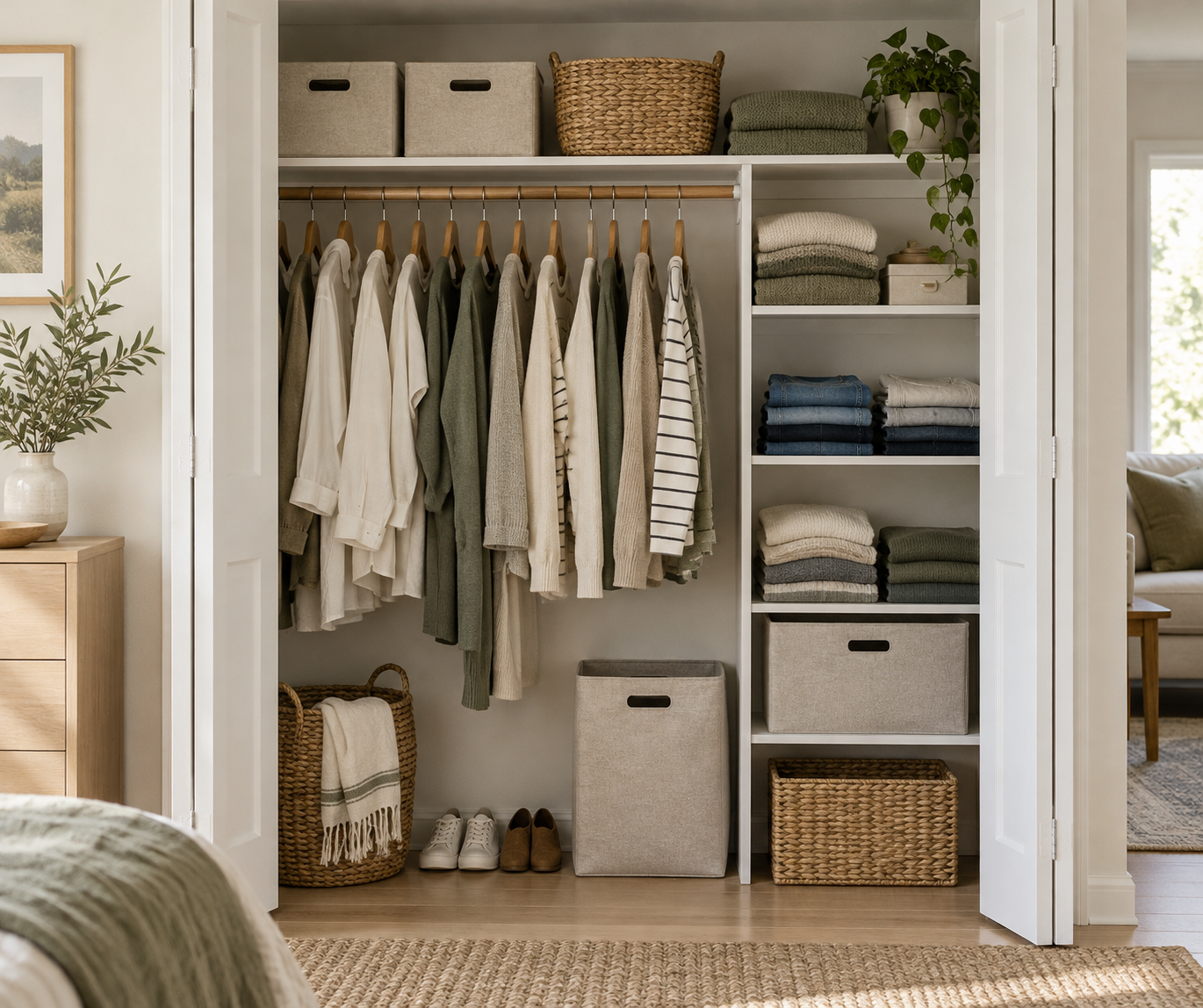
Make everyday clothes easier to find with a simple closet reset. Start with your current shelves and hangers, then decide whether you actually need more storage.
1. Start with one manageable section
A crowded closet can be difficult to use even when every item technically fits. Choose one rail, shelf, or drawer and finish it before moving to the next. Put aside a bag for items you decide to donate and a separate spot for things that belong elsewhere. Check with other household members before moving their belongings.
Keep the floor and the exit clear while you work. You do not need to turn the whole room into a sorting area. If time is limited, start with the clothes you reach for on a normal weekday.
2. Sort around the life you actually live
Group clothes by type, then ask which pieces fit, feel comfortable, and suit your current routine. Separate items needing repair so they do not disappear back into the wardrobe. Make a specific plan for each repair rather than keeping an indefinite pile.
An occasional-use outfit can still deserve a place. The aim is to make everyday choices easier, not to meet an arbitrary item count. Put seasonal clothing together only if you have a suitable clean, dry place to keep it.
3. Give prime space to frequent use
Place frequently worn clothes where you can comfortably see and retrieve them. Fold items that work well on your shelves, and hang pieces that benefit from hanging. Avoid tall, unstable piles: several smaller groups may be easier to maintain.
Keep heavy items low and do not overload shelves or rods. Follow the closet hardware specifications. Store shoes where they will not block access, and give bags a defined section rather than scattering them across the floor.
4. Use the containers you already have
A clean box can separate scarves or other small accessories. Try a simple arrangement for a week before buying coordinated baskets. Labels are helpful if they prevent guessing, especially for shared storage.
Measure usable shelf width, depth, and height before ordering containers. Allow clearance for doors and handles, and check whether you can pull the container out without moving several others. Matching boxes are optional; easy retrieval matters more.
5. Make putting clothes away easy
Notice the step that causes a pile to form. Perhaps a hamper is inconvenient, a shelf is too high, or hangers are packed too closely. Change that step instead of adding a more complicated system.
Keep a small return routine: hang or fold clean clothes, send laundry to the hamper, and return accessories to their section. Revisit the setup after a normal week and adjust anything that takes too much effort.
Your practical checklist
- Sort one section at a time.
- Keep everyday items accessible.
- Separate repairs and misplaced belongings.
- Use stable stacks and respect hardware limits.
- Measure before purchasing storage.
- Test the system through a normal week.
Leave a Reply